Period Tracker and Calendar
- 4.9
- Rating
- 10.00M
- Installs
- Free
- Price

 Analysis by App-foxy
I noticed the appeal of Period Tracker and Calendar almost immediately: it turns a subject that is easy to postpone into a simple routine. Instead of trying to remember the last period in a notes app or relying on a vague mental estimate, I can open one focused medical app and record what matters. Its clean presentation makes the first week feel pleasantly uncomplicated, but the more important question is whether it remains useful after the novelty wears off.
My overall experience is that it can earn a lasting place on a phone when I use it as a personal record rather than as a crystal ball. The app is made by SimpleInnovation, is free to start, and is rated for Everyone. It has reached more than ten million installs and holds an average rating of 4.9 from roughly 543,000 ratings, which suggests that its straightforward approach works for a large audience. Still, a high rating does not remove the need to use health predictions thoughtfully.
What the first week feels like
The initial attraction is the low effort. Period Tracker and Calendar is built around logging a cycle and observing related information, rather than asking me to manage a complicated health dashboard. That matters because the best tracker is usually the one I will actually open when I am tired, busy, uncomfortable, or away from home.
You May Also Like

 AccuWeather: Weather Radar
AccuWeather Review: A Quick, Clear Forecast for Everyday Decisions
For everyday plans, the best forecast is the one you can understand quickly. AccuWeather makes rain timing, radar, and local conditions easy to act on, with a few trade-offs.

 Hill Climb Racing
Why Hill Climb Racing Still Turns Crashes Into One More Run
A tiny car, a bumpy hill and one more upgrade: Hill Climb Racing keeps resurfacing because its simple chaos makes every near-miss feel personal.

 AliExpress - Shopping App
AliExpress Makes Global Shopping Feel Personal, but Shoppers Bear the Risk
AliExpress turns a global marketplace into a pocket-sized discovery engine. Its reach is useful, its shopping loop compelling, and its trade-offs easy to miss.

 Lords Mobile: Kingdom Wars
Lords Mobile Is a Kingdom-Building Routine, Not a Quick Match
A case-by-case verdict on the building, battles, device demands, and social commitments that make Lords Mobile rewarding for some players and exhausting for others.

 PDF Scanner app - TapScanner
TapScanner Makes Paperwork Easier to Capture, Check, and Share
TapScanner makes scanning with a phone feel less like a rescue operation and more like a dependable step in getting work done. Its capture tools are useful, though not flawless.

 Block Blast!
 Shows How Much a Puzzle Game Can Leave Out
A quiet grid game shows why puzzle players increasingly value instant clarity, repeatable skill and low-pressure play—and where the genre still needs to catch up.
More From Our News Desk
View All News


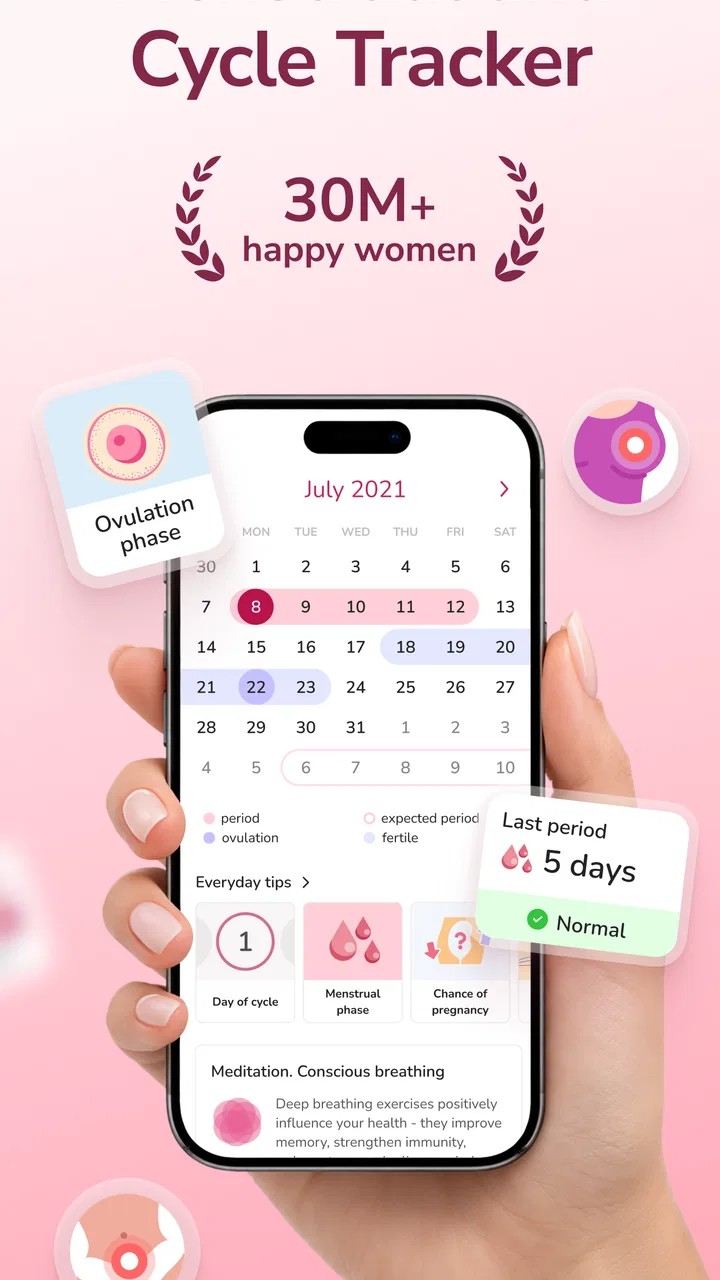
I found the calendar-style approach easier to understand than a long stream of isolated entries. A visual record gives the month some context: I can see when bleeding began, compare one cycle with another, and notice whether symptoms tend to appear at a particular point. The app’s store summary also positions it around fertility and PMS symptoms, so it is more useful than a simple reminder that says only “period expected.”
My practical advice is to begin with a small amount of information. Log the start of the period first, then add symptoms only when they are genuinely useful to you. Trying to document every sensation from the first day can make the routine feel like homework. A lighter beginning makes it easier to discover which details help with planning, medical conversations, or recognizing personal patterns.
One non-obvious benefit of starting simply is that it creates a cleaner baseline. If I record everything inconsistently, later patterns become difficult to interpret. If I record the same core information each time and add optional observations when I can, the calendar becomes more meaningful over several months. That is a better use of the app than filling it with a burst of detailed entries and abandoning it afterward.
The first week is also when I decide whether the app’s language and predictions suit my needs. Fertility estimates and expected dates are useful as planning aids, but they should not be treated as guaranteed medical conclusions. Bodies do not always follow a repeating schedule, and stress, illness, medication, age, and other circumstances can affect a cycle. I would use the forecast to prepare, not to make an important health decision by itself.
Useful setup habits before relying on predictions
I recommend entering the most accurate recent information I have rather than guessing several past cycles just to make the calendar look complete. A tracker becomes more helpful when its history reflects real observations. If I am unsure about a date, I would rather leave my memory imperfect than create false precision that might influence later expectations.
It is also worth deciding what the app is for. Someone may want a discreet way to anticipate bleeding, another person may be watching PMS symptoms, and someone else may be interested in fertility timing. Those goals overlap, but they are not identical. Period Tracker and Calendar can support personal awareness, yet it should not replace professional advice, contraception, pregnancy testing, or care for symptoms that feel unusual or severe.
The app is available for Android devices running version 7.0 or later, and the current version is 12.1.0. That makes it accessible to people using older supported phones as well as newer ones. I would still check that the device has enough space and that the app behaves comfortably on the particular screen before building a long-term routine around it.
Why it can remain useful month after month
The strongest recurring value is not the prediction on the next calendar page. It is the accumulated record. After several cycles, I can look back and ask practical questions: Do symptoms usually begin before bleeding? Are some months noticeably different? Do I tend to forget to log when my schedule becomes hectic? Those observations can help me prepare supplies, plan demanding days, or explain a pattern more clearly during a medical appointment.
A realistic everyday scenario is a person with an unpredictable work schedule who wants fewer surprises. Before a trip or a demanding week, I can check the calendar, pack what I may need, and leave room for uncertainty instead of assuming the predicted date is exact. If PMS symptoms commonly affect my sleep or concentration, recording them can also help me notice whether the issue is occasional or recurring. The value comes from connecting the record to decisions I already make.
Another useful workflow is to log symptoms at the moment they are noticeable, not several days later. A quick entry is more likely to be accurate than a weekend attempt to reconstruct the entire week. I would keep the labels meaningful and avoid recording a symptom merely because the app offers the option. The goal is to create a personal signal, not a large collection of low-quality data.
Over time, the calendar can also make conversations less vague. Saying “I often feel this before my period” is different from being able to describe when it happened across multiple cycles. That does not turn the app into a diagnostic tool, but it can help me organize what I want to mention to a clinician. If pain, bleeding, mood changes, or other symptoms are severe, worsening, or disruptive, the record should support professional care rather than delay it.
Compared with the usual alternative of a paper calendar, Period Tracker and Calendar is easier to keep with me and more naturally suited to symptom notes. Compared with a general notes app, it gives the information a cycle-based context. A broad health platform may be a better choice for someone who wants exercise, sleep, medication, and several other measurements in one place, but that wider scope can also create more work. This app’s narrower focus is its advantage when I want menstrual tracking without building an entire personal health database.
The free entry point is important for long-term testing. I can see whether the routine fits my life before deciding whether additional options are worth paying for. In-app purchases range from $1.99 to $69.99 per item, so I would review each purchase carefully rather than assuming every extra is necessary. For me, the core question is whether the free experience already supports the tracking habit I actually need.
Using the history without overinterpreting it
The best way to read the history is comparatively and patiently. One unusual cycle does not automatically reveal a new pattern, and a predicted date should not be used to dismiss what my body is telling me. I would look for repeated tendencies, record meaningful changes, and treat the calendar as a prompt for attention.
This is especially important for anyone considering the app for fertility awareness. A calendar estimate alone is not a dependable substitute for a method that has been learned and followed correctly, and it should not be treated as guaranteed protection against pregnancy. If avoiding pregnancy or trying to conceive is the central reason for using a tracker, I would pair the app with appropriate medical guidance and a method suited to that goal.
For PMS tracking, the app is more convincing as a reflection tool than as a treatment tool. It may help me recognize that headaches, cravings, irritability, or fatigue appear at a recurring time, but it does not make the symptoms harmless or explain their cause. The useful action is what comes after the observation: adjusting plans, discussing concerns with a healthcare professional, or seeking help when symptoms interfere with normal life.
The maintenance burden behind the simple surface
Any tracker depends on consistency, and this one is no exception. The app may be easy to open, but the record becomes less valuable when I skip several cycles or enter dates from memory. That maintenance burden is small compared with managing a detailed health journal, yet it is still a real commitment. The app earns its space only if I develop a repeatable habit.
I found that attaching logging to an existing moment works better than relying on motivation. I might make an entry when I first notice bleeding, then add a brief symptom note during an evening routine. The exact time is less important than choosing a moment that happens reliably. A reminder can help some people, while others may find repeated prompts irritating; the right approach depends on whether notifications support attention or create another source of pressure.
There is also a privacy-related maintenance habit that is easy to overlook: I should be deliberate about what I enter and who can access my phone. Menstrual and fertility information is personal. I would use the app in a way that matches my comfort level, avoid entering details I do not need, and review the device’s general security settings. I would not assume that convenience means I should record every intimate detail available.
People with very irregular cycles may face a higher maintenance cost because predictions can feel less satisfying when the underlying pattern changes often. The app can still provide a record, but its forecast may be less dependable than its calendar history. In that situation, I would judge it mainly by how well it helps document real dates and symptoms, not by whether it can produce a precise expected day.
Someone with a regular cycle may experience the opposite trade-off. The app can be reassuring and convenient, but the information may feel repetitive after the basic pattern is familiar. The continuing value then comes from symptom tracking, planning, or having an organized history—not from checking a date that I already know fairly well.
Where fatigue and friction can appear
The first source of fatigue is repetition. Logging the same basic event every month is not exciting, and a tracker cannot create a habit for me. If I am not willing to make brief entries, even a polished calendar will eventually become an outdated snapshot. This is why I would recommend it more strongly to someone who wants a simple routine than to someone who dislikes all forms of self-monitoring.
The second source is uncertainty. Predictions can look more authoritative than they really are because they appear neatly on a calendar. I need to remember that an estimate is based on recorded history, not a promise about what will happen. When the prediction and my experience disagree, the experience wins, and the discrepancy itself may be worth recording.
A third issue is the temptation to overtrack. More entries do not automatically mean better insight. If I spend too much time choosing categories or trying to explain every mood change, the app can turn into a source of anxiety. My preferred approach is selective logging: record what affects daily life, what I want to discuss with a clinician, or what may reveal a repeated pattern.
The purchase structure may also cause hesitation. The app is free, but optional items can cost from $1.99 up to $69.99 each. That broad range makes it important to understand what an upgrade adds before paying. I would use the free version long enough to test the basic routine and only consider an in-app purchase if it solves a specific problem I have already encountered.
There is a further limitation for people seeking a complete health ecosystem. Period Tracker and Calendar is a focused medical app, not a replacement for every wellness tool. If my priority is combining menstrual information with detailed sleep, fitness, medication, or clinical records, a broader platform may reduce the number of separate apps I use. The trade-off is that a broader platform can feel heavier, while this app is easier to approach when menstrual tracking is the main task.
I would also skip it as my primary solution if I expect an app to diagnose symptoms, guarantee fertility timing, or tell me whether a serious change is safe to ignore. No calendar can make those judgments responsibly. The right response to concerning symptoms is qualified medical care, with the app used only as supporting documentation if that is helpful.
Does it deserve permanent space?
After the first-week appeal fades, Period Tracker and Calendar still has a reasonable case for staying installed. Its lasting value comes from making a recurring personal record easier to maintain than scattered notes. The calendar view, symptom focus, and fertility-related planning give it more purpose than a basic date reminder, while the focused design keeps the task from feeling like a full-time health project.
I would recommend it to someone who wants a straightforward period and PMS log, appreciates a visual history, and is prepared to treat predictions as estimates. It is particularly suitable for building a calm record over time: a few consistent entries can be more useful than an ambitious tracking scheme that lasts only one month.
I would be more cautious about recommending it to someone who needs clinical-grade guidance, has highly irregular symptoms and expects precise forecasts, or wants every health metric in one place. Those users may be better served by professional advice or a broader health platform, depending on the actual need. The app should fit the purpose, not become the purpose.
SimpleInnovation has kept the product accessible across supported Android phones, and its current version is 12.1.0. With a 4.9 average and a large user base, it is clearly popular, but popularity is not the reason I would keep it. I would keep it because a short, repeatable entry can turn a vague monthly experience into a record I can understand and use.
My final judgment is positive, with one condition: use it lightly and consistently. Its real strength is not predicting the future perfectly; it is helping me remember the past clearly enough to make better everyday decisions. If that is what I want from a period tracker, the free starting point makes it worth trying. If I am looking for certainty, diagnosis, or a complete medical system, I would choose a different kind of support.
FAQs for Period Tracker and Calendar
01How accurate is the Period Tracker and Calendar in predicting menstrual cycles?
Period Tracker and Calendar uses advanced algorithms to predict your menstrual cycles based on the data you provide. While it becomes more accurate over time as you input more cycles, it's important to remember that various factors like stress and lifestyle changes can affect cycle regularity. Consistent data entry improves prediction accuracy.
02Can I use the Period Tracker and Calendar to track symptoms and moods?
Yes, the app allows you to track various symptoms and moods throughout your cycle. This feature helps users identify patterns related to their menstrual health. By logging symptoms like cramps, headaches, or mood swings, you can gain valuable insights into how your cycle affects your overall well-being.
03Is my personal information secure on the Period Tracker and Calendar app?
The app prioritizes user privacy and security. It employs encryption protocols to protect your data and offers options to use a password or biometric login for additional security. However, users should always be cautious and review the app's privacy policy to understand how their data is handled.
04Does the Period Tracker and Calendar offer reminders for important dates?
Absolutely. The app provides customizable reminders for various events such as the start of your next period, ovulation days, and medication schedules. These reminders can be tailored to your preferences, ensuring you never miss an important date related to your menstrual health.
05Can the app be used for fertility tracking and planning?
Yes, the Period Tracker and Calendar includes features for fertility tracking. It estimates your fertile window and ovulation days to assist with family planning. While it can be a helpful tool, it's recommended to consult with a healthcare professional for personalized advice related to fertility and conception.
Pros
- User-friendly interface for easy navigation.
- Customizable reminders for different needs.
- Tracks mood and symptoms efficiently.
- Offers fertility and ovulation insights.
- Data backup and sync across devices.
Cons
- Ads can be intrusive at times.
- Limited features in free version.
- Some features require premium upgrade.
- Occasional sync issues reported.
- Privacy concerns with data handling.

Period Tracker and Calendar
Gallery